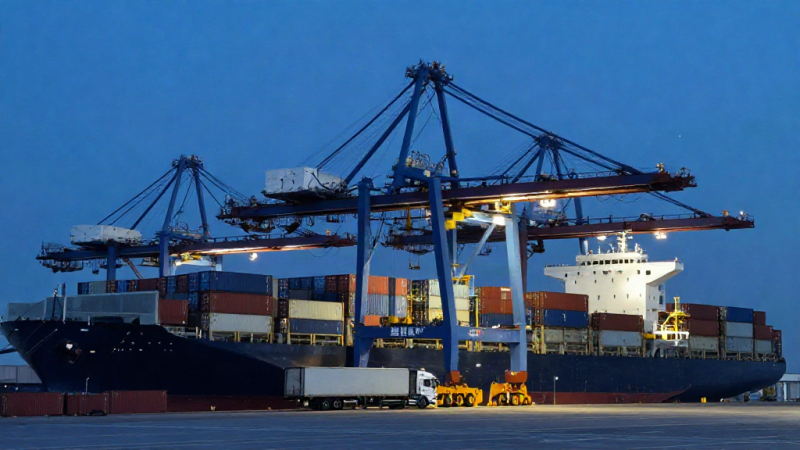
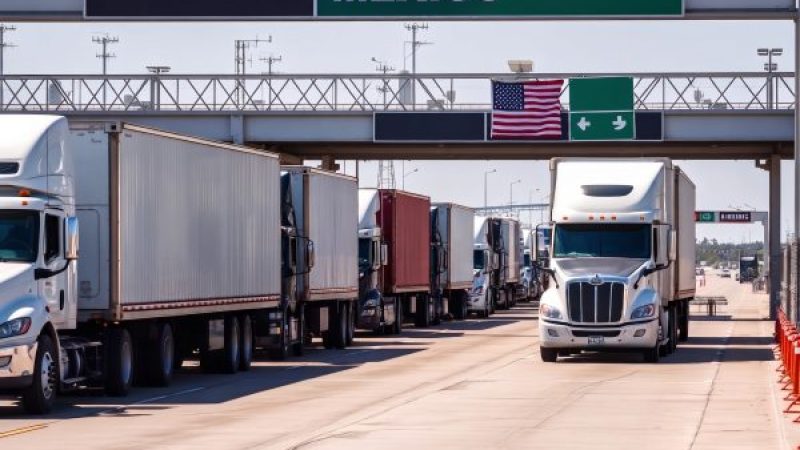
Moving cargo between Mexico and the United States almost never fails on the road: it fails on paper. Customs clearance is the point where a well-planned operation stops or flows, and where most of the cost and time surprises appear.
In this guide we have gathered the most frequently asked questions from manufacturing, trading and import/export companies and answer them without hesitation. If your business crosses borders, this saves you hours of uncertainty.
What is the customs office and when does your operation need it?
The customs clearance process is the set of procedures, documents, and validations that allow your goods to legally cross a border. It includes the tariff classification of your product, the determination of duties, the filing of the declaration, and coordination with the customs authority to have the cargo cleared.
You need it every time your goods cross a border: import, export, transit, or land crossing Mexico-USA. It is not an optional procedure or an administrative detail: it is the condition for your cargo to move forward, be delivered on time, and not be held up, generating costs that no one budgeted for.
In practice, the customs clearance department is where it is decided whether your supply chain succeeds or fails. An operation with well-managed clearance delivers predictably; one without it fanned the flames.
Documents, deadlines and costs that often generate doubts
What documents do I need before moving the cargo?
The basic documents are the bill of lading, the commercial invoice, the transport document (consignment note or bill of lading) and the certificate of origin when your product and the applicable treaty allow it. This is supplemented by any previous authorizations or permits required by your product: official Mexican regulations (NOM), health warnings, quotas or sector-specific regulations.
A key point: if your supplier does not provide the invoice with the correct data, no customs agent can compensate you afterwards. Incomplete documentation is the number one cause of delays and days lost at the border.
How long does a customs clearance process take?
It depends on the type of cargo, the crossing point, and the level of review assigned by the authority. A well-prepared and fully documented shipment is usually resolved within hours; one with inconsistent information can take days and drag on with storage costs, delays, and re-scheduling.
The difference is almost never in the customs office: it's in how prepared your application is.
How much does customs clearance cost and what makes it more expensive?
The cost consists of contributions and taxes that apply to your goods, applicable duties and charges, and the handling fees. There is no single price: it depends on the tariff fraction, the value of your cargo, the regime and type of operation.
What really increases the cost of a shipment is not the tariff, but what happens when something goes wrong: an incorrect tariff classification that is corrected late, a hold, unplanned storage, or a fine for inconsistent documentation. That’s where an operation loses the margin it thought it had.
How to manage customs clearance without delays or surprises
The formula is less complicated than it seems, but it requires discipline on three fronts.
First, classify well from the start. A correct tariff fraction defines taxes, requirements, and permits; misclassifying it contaminates everything that comes after.
Second, standardize your documentation. Have clear templates for invoices, shipping instructions, and records, and verify before the cargo leaves that it is correct, not when it is already at the border.
Thirdly, work with visibility. You need to know at what stage each operation is going, what review has been assigned to it and what is still to be done. Without visibility, any delay becomes a surprise; with it, it becomes a decision.
This is where an integrated logistics partner makes the difference. It’s not just about presenting a proposal: it’s about anticipating the obstacle before it hinders your cargo.
Quick Frequently Asked Questions
Can I do the customs clearance myself?
You can prepare and coordinate your documentation, but the presentation of the shipment to customs requires an authorized customs agent. What is within your control is the quality of the information you provide and the planning of your operation.
What happens if my cargo is detained?
A review or a request for information is initiated. The time for release depends on the cause: a missing data item is resolved quickly, an inconsistency in classification or value may take longer. The key is to respond accurately and with documentary support, not to improvise.
Does the customs office apply the same rules for exports and imports?
The process changes depending on the regime and the direction of the operation, but the logic is the same: meet requirements, classify correctly, and document. A partner who masters both senses prevents you from having to coordinate two worlds separately.
Turn your customs office into an advantage, not a risk
The customs clearance department should not be the bottleneck of your operation or the source of your additional costs. When managed well, it ensures that your cargo crosses the border on time, meets all requirements, and arrives safely.
At eLogistix Shipping, we integrate maritime, air, land, and multimodal transport, cross-border Mexico-USA, customs clearance, and warehousing under a single partner, with cargo tracking and real-time visibility. Your cargo, our commitment.
Do you have an operation to cross over? Request your quote and let's together build the office your chain needs.