As your operations grow between Mexico, the United States, and the rest of the world, the time comes to decide with whom to move your cargo. The fundamental question isn’t just how much the freight costs, but which model of provider gives you more control: a traditional freight forwarder or a full-service logistics operator.
What a traditional freight agent does
A freight agent acts as an intermediary. He reserves space with shipping companies and airlines, consolidates shipments, and coordinates the transportation of your goods from one point to another. His strength lies in freight pricing: negotiating rates, securing quotas, and devising the most convenient route for each shipment.
Their limit is also there. When the process becomes complicated (multiple stages, different modes, customs procedures, warehousing), the agent starts coordinating with third parties. That’s where the gaps appear: fragmented information, divided responsibilities, and points where no one gives you a complete answer.
What does an integral logistics operator do?
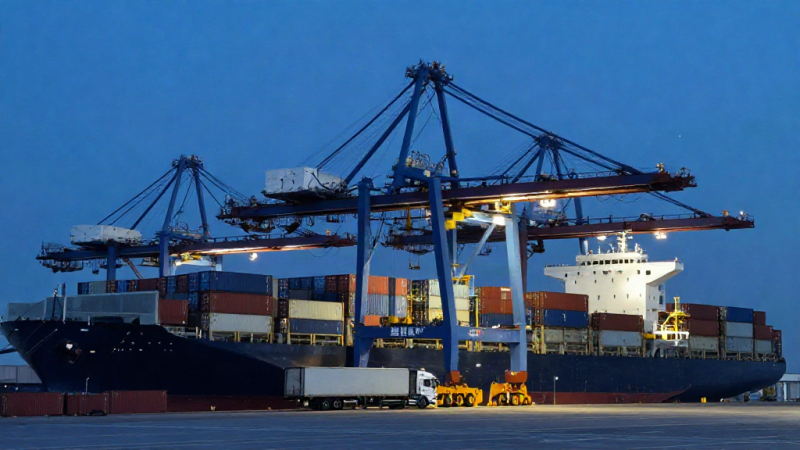
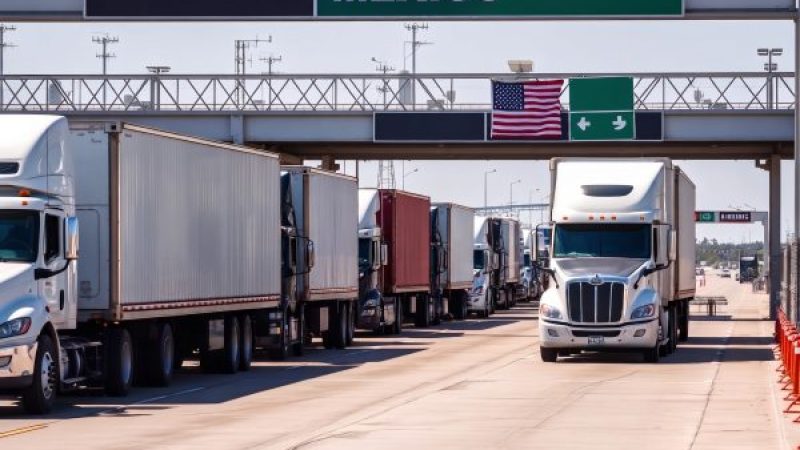
An integrated logistics operator takes on the entire chain. It does not just obtain quotas: it integrates maritime, air, land and multimodal transport, manages border crossings, customs clearance and warehousing under a single operational and commercial umbrella.
The difference is felt in day-to-day operations. You have a single interlocutor, a single contract, and a single version of what happens with your cargo. When something moves, you know it; when something gets complicated, there is a clear responsible person who resolves it.
Scope, control and responsibility: the fundamental difference
Reach. The freight forwarder covers only the part you hire them for. The full logistics operator covers the entire journey from origin to destination, including the links that are often left uncovered: customs, warehousing and the last international mile.
Control. With multiple providers, visibility depends on each one sharing their part of the data. With a full-service operator, monitoring and real-time visibility live in the same system, so you see the entire journey, not just a snippet.
Responsibility. When five suppliers are involved, a delay becomes a debate about who is responsible. When there is only one supplier, there is no debate: there is a conversation and a solution.
Advantages and limitations compared to complex multimodal operations
The traditional freight agent shines in simple and stable operations: a fixed route, mode and destination. It can also be convenient if you already have your own customs and warehouse structure, and you only need a good freight broker.
The scenario changes when your operation is multimodal. Adding maritime, air and land transport, crossing the border and storing goods requires fine coordination. Each provider adds a point of friction: a different data format, a different schedule, a different approach.
That’s where the integrated model is gaining ground. The advantage is not only operational; it’s also time-saving: fewer meetings, less chasing down information, fewer hours spent connecting pieces that should be connected.
Its limitation deserves honest mention: a full-service logistics operator usually involves a deeper and less interchangeable relationship than a spot freight. If your absolute priority is the lowest price for a single segment, that model isn’t always the cheapest to begin with. What you save appears later, in fewer errors, less delays, and fewer hidden costs.
How to choose based on your volume, destinations, and need for visibility
Your volume. If you move sporadic and simple shipments, a freight agent may be enough. If your operation is constant and growing, integration starts to pay off on its own.
Your destinations. A route, a mode, and a country simplify everything. Multiple destinations, multiple modes, and frequent border crossings require a partner that masters every link.
Your need for visibility and compliance. If your customers require firm dates and traceability, you need to see the entire chain in real time, not just fragments from different suppliers.
If your answers point to complexity, the integrated model is not a luxury: it is the way to regain control of your operation.
One partner for your entire chain
At eLogistix Shipping, we work with that principle. We are a comprehensive logistics operator that covers your entire supply chain: maritime, air, land, and multimodal transport, cross-border Mexico-United States shipping, customs clearance and warehousing, with cargo monitoring and real-time visibility.
We don't compete with you: we support you. Your burden remains yours and your operation remains yours, but you stop being the glue between suppliers who don't speak to each other.
Conclusion
The traditional freight agent solves part of the problem well. The full-service logistics operator solves the entire problem. The choice depends on your operation: if it’s simple, specialization is enough; if it’s complex, integration is what gives you time, visibility, and compliance.
Are you considering changing your model? Let's talk about your chain and find out which scheme suits you best. Request your quote.