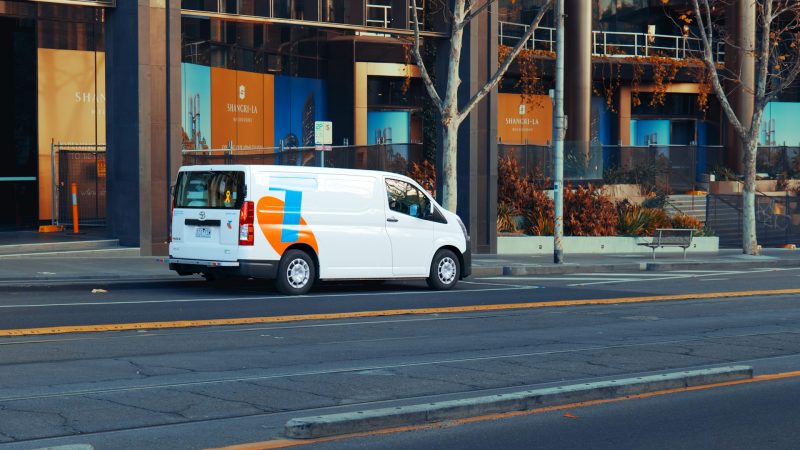
The last mile has become the battleground where customer experience and business profitability are decided. In Mexico, this link in the logistics chain can account for up to 50% of the total cost of delivering a product to the end consumer. And the pressure keeps growing.
The phenomenon redefining the market
E-commerce in Mexico reached a value of 941 billion pesos in 2025, with 19.2% annual growth and 77.2 million digital shoppers. This explosive growth has pushed national logistics infrastructure to its limit. As Antonio Torres, CEO of Lievant, notes: 'Logistics infrastructure is definitely not keeping pace with e-commerce growth, and it's unlikely to catch up.'
High-demand seasons, like Hot Sale, can increase last-mile orders by 40% to 50% per day compared to a normal month, creating saturation at fulfillment centers and delivery networks. Even giants like Amazon and Mercado Libre have had to double their delivery times during these periods.
Microhubs: the answer to urban congestion
Faced with this scenario, logistics microhubs are emerging as the most effective solution. These are small distribution centers strategically located near urban areas that reduce distances, times, and operational complexity.
Their value isn't in storing large volumes, but in moving goods quickly. These high-turnover urban nodes integrate real-time data, advanced analytics, and predictive models that allow companies to react before demand happens. Cities like Mexico City, Monterrey, and Guadalajara are already adopting this model in sectors like retail, consumer goods, fashion, and food service.
In Querétaro, demand for urban warehouses and microhubs has accelerated notably. The state recorded industrial absorption of 50,000 square meters in May 2026, double the same month in 2025, with the Airport corridor accounting for 78% of activity.
Ultra-fast deliveries: the new standard
Consumer expectations have evolved dramatically. Today it's not enough to deliver; it has to happen in under 2 hours. Solutions like DispatchTrack's QuickCommerce already enable this speed, with features like automatic driver assignment, delivery app integration, and multichannel notifications that cut delivery times by 50% and boost customer satisfaction by 35%.
El mercado del quick commerce crecerá a una tasa anual compuesta del 8.05% entre 2025 y 2029, alcanzando un valor de 265 mil 800 millones de dólares y una base de 900 millones de usuarios .
Technology as an enabler
The success of modern last-mile logistics depends on technology. Artificial Intelligence and Machine Learning are key to optimizing routes, predicting demand, and allocating loads efficiently. Microhubs operate as mini 'control towers,' connecting data on demand, weather, traffic, inventory, and local patterns to make real-time decisions.
Companies that have integrated these logistics models have achieved cost reductions of up to 20% and significant improvements in indicators like On Time In Full (OTIF), which some companies already operate close to 98%.
Reverse logistics: the next front
Product returns have become a strategic challenge. In categories like fashion, returns represent between 8% and 15% of sales, a percentage that can rise to 50% during high-demand campaigns. And the cost is significant: reverse logistics costs up to three times more than forward logistics.
In 2026, reverse logistics will stop being seen as a cost and become a key piece of customer satisfaction, with traceability, automation, and optimized flows.
The 'last meter' challenge
As the industry points out, the last mile is no longer the main challenge: today the challenge is the 'last meter.' Speed no longer depends only on geographic distance, but on the ability to manage data, anticipate behavior, and collaborate with every player in the logistics ecosystem.
At Elogistix we understand the challenge
We know that keeping delivery promises in an environment of accelerated growth and constant pressure is getting harder. That's why we've built a network of strategic partners that lets us operate microhubs in the country's main cities, integrating cutting-edge technology to offer full visibility and competitive delivery times.
Last-mile logistics is no longer an operating cost: it's a competitive advantage that defines your business's success in e-commerce.