Exporting for the first time feels like a leap into the unknown: documents, customs, transit times, and a myriad of acronyms that no one explained to you. The good news is that international logistics for Mexican companies doesn’t have to be a maze. With the right preparation and the right partner, your first export can become the start of a solid and predictable sales channel.
In this guide we have gathered the essentials: what you need before your first shipment, how to choose the transport mode and what to look for in an integrated logistics partner that gives you control and visibility from start to finish. We don’t compete with you: we support you.
Before your first export: what you should have ready
The most common mistake of a company that starts exporting is to think about shipping before thinking about compliance. Shipping is only one part of the process; what really stops an shipment is a missing document or a poorly done classification. Before quoting, order these fronts.
Basic documents and compliance
Your operation needs to have at least these elements clearly defined:
- Tariff classification (fraction): Define tariffs, regulations, and permits. A mistake here can cost you days at the border.
- Commercial invoice and packing list: They must match exactly what is in the container.
- Certificate of origin: indispensable to take advantage of the benefits of free trade agreements, such as the T-MEC.
- Transport documents (Bill of Lading / Air Waybill): the legal backing of your cargo.
- Permits and non-tariff regulations: Depending on your product, health, labeling, or safety regulations may apply.
Your first filter: To whom do you sell and from where?
Exporting raw material to an industrial customer in Texas is not the same as selling finished product to a distributor in Europe. Defining the destination, the Incoterm (FOB, CIF, DAP…) and who assumes each responsibility prevents discussions and additional costs later on. If your team is not familiar with Incoterms, this is the time to rely on someone who is proficient in them.
The modes of transport and which one is best for your cargo
There is no universally best mode of transport: there is the one that best suits your load, your destination, and your time constraints. These are the four main routes, and when each one makes sense.
Maritime transport
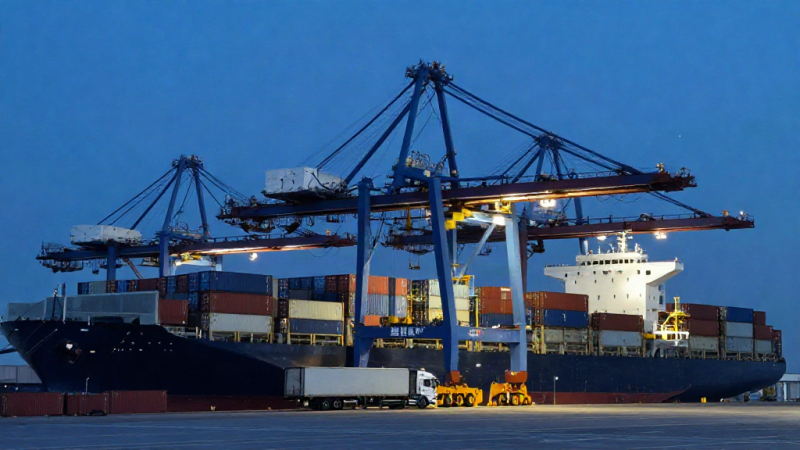
It is the king when it comes to unit cost and volume. Ideal for heavy, consolidated or oversized cargo, especially if week-long transit is acceptable. If you are just starting out and are looking for cost efficiency on a scale, sea freight is usually the natural route.
Air transport
Fast, safe, and perfect for high-value, perishable, or urgent products. The cost per kilo is higher, but it allows you to fulfill demanding delivery commitments and reach the market ahead of your competitors. Many manufacturing companies use it for samples and launches.
Land transport and cross-border
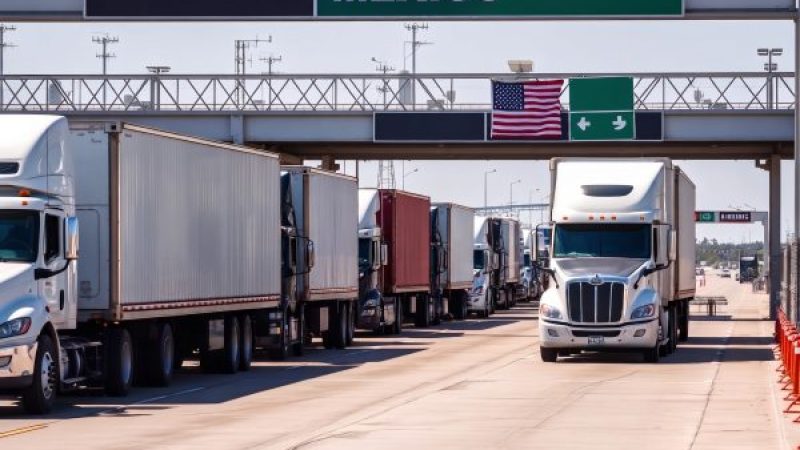
If your main market is the United States, the truck is the inevitable complement. Crossing the Mexico-US border requires precise time management, documentation, and coordination with the customs agent. This is where a partner with local support makes the difference between a timely delivery and hours lost at the border.
Multimodal: the best of each mode
The multimodal option combines, for example, maritime and land transport to take you from the Mexican port to the customer's warehouse in another country under a single coordination. You don't choose a mode; you choose a route designed around your operation.
How to choose an integrated logistics partner
A logistics partner is not just another supplier: it is the extension of your operations team. Before deciding, ask yourself if it offers you these four things.
Control and real-time visibility. You must be able to know where your cargo is at all times. Visibility is not a luxury: it is what allows you to respond to your customer before they ask you.
Real coverage on both sides of the border. International logistics involves coordinating two customs authorities, two regulatory frameworks, and several actors. A partner with operational presence in Mexico and the United States reduces intermediaries and response times.
Services under one roof. Maritime, air, land and multimodal transport, customs clearance and warehousing. When everything lives in one place, the gaps where cargo and responsibilities are often lost are eliminated.
I treat you as a partner, not as a guide number. A good ally explains the process to you, anticipates risks, and responds when things get complicated. That level of closeness is worth as much as the price.
Your first export starts with a good decision
Taking the plunge into international markets doesn’t require that you know everything from day one. It requires preparing your documentation, choosing the right mode of transportation, and surrounding yourself with a logistics partner who will take care of the details while you focus on selling.
At eLogistix Shipping, we turn your logistics into a competitive advantage: a single partner for your entire supply chain, with control, real-time visibility, and support in Mexico and the United States. If you are ready for your first export, request your quote And let's start moving your cargo.